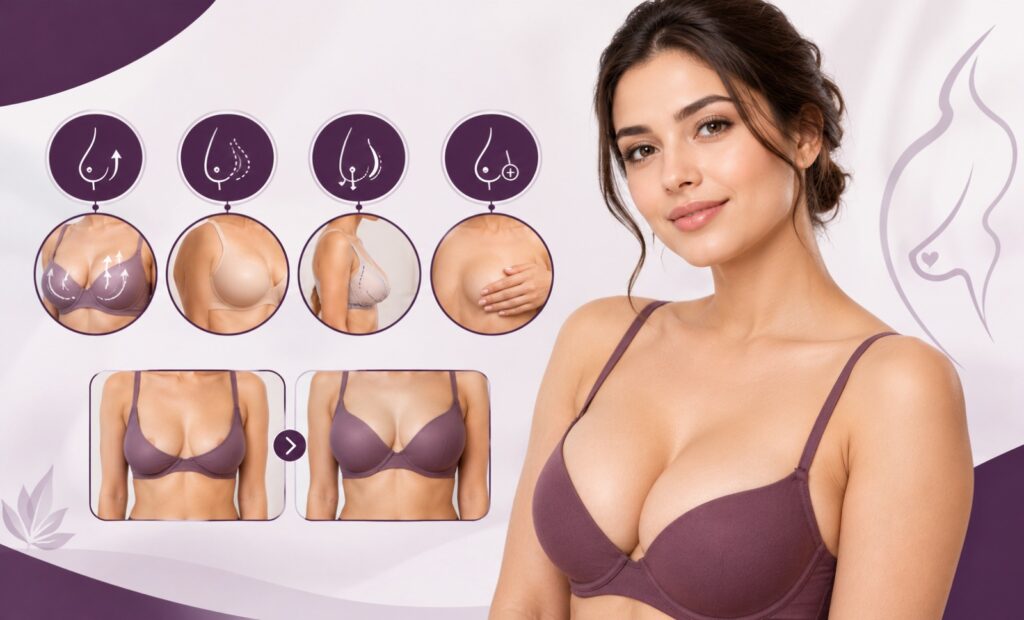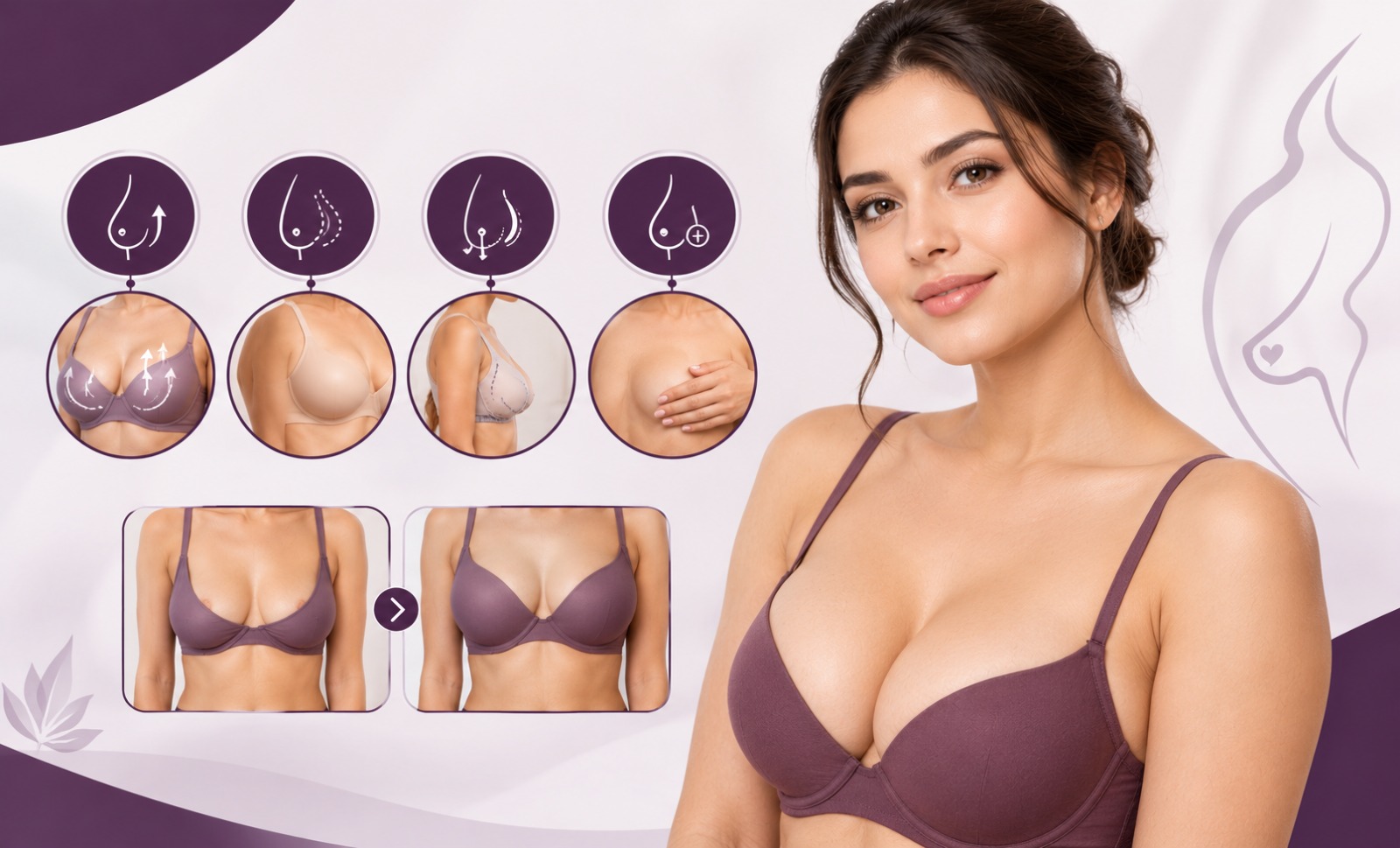
Breast augmentation is one of the most popular cosmetic procedures, and today you have more than one way to achieve fuller breasts. The two main options are breast implants and fat transfer breast augmentation. Each works differently, delivers different results and suits different goals. This guide explains the pros and cons of both so you can walk into your consultation informed and confident.
What Are Breast Implants?
Breast implants are medical-grade devices placed behind the breast tissue or under the chest muscle to increase size and improve shape. They come in two main types:
- Silicone implants: filled with a cohesive silicone gel that feels natural and holds its shape well.
- Saline implants: filled with sterile salt water, placed empty and then filled during surgery.
Implants are available in different sizes, profiles and shapes (round or teardrop), which allows a high degree of customisation.
What Is Fat Transfer Breast Augmentation?
Fat transfer, also called fat grafting or autologous breast augmentation, uses your own body fat. The surgeon removes fat from areas such as the abdomen, thighs or flanks using liposuction, purifies it, and injects it carefully into the breasts. There is no implant involved, so the result comes entirely from your own tissue.
Pros of Breast Implants
1. Significant, predictable size increase. If you want a noticeable change, such as going up one or more cup sizes, implants are the more reliable route. Your surgeon can choose a size and profile that matches your goals and body frame.
2. One main procedure. Implant surgery is usually completed in a single session, and the result is visible fairly quickly once swelling settles.
3. Improves upper-pole fullness and shape. Implants can create cleavage and projection that fat transfer struggles to match.
4. Wide choice and customisation. From size to shape to texture, you can plan the result in detail before surgery.
Cons of Breast Implants
1. Implants are not lifetime devices. Most women will need a revision, replacement or removal at some point, so you should plan for possible future surgery.
2. Specific risks. These include capsular contracture (hardening of scar tissue around the implant), implant displacement, rippling, changes in nipple sensation and, rarely, rupture. Choosing an experienced surgeon and following aftercare reduces these risks.
3. Foreign material in the body. Some women prefer not to have a device in their breasts, and regular follow-up is advised.
4. Can look less natural in very slim women if the implant is too large for the existing tissue.
Pros of Fat Transfer Breast Augmentation
1. Natural look and feel. Because it is your own fat, the breasts tend to feel soft and move naturally.
2. Two procedures in one. You also get body contouring, since fat is taken from areas where you would like to slim down.
3. No implant-related complications. There is no risk of implant rupture or capsular contracture, and no device to replace later.
4. Small scars. Fat is placed through tiny incisions, so scarring is minimal.
Cons of Fat Transfer Breast Augmentation
1. Modest size increase. Fat transfer usually adds about one cup size, sometimes a little more. It is not ideal if you want a dramatic change.
2. Unpredictable fat survival. Not all the transferred fat survives. A portion is naturally absorbed by the body, and the final volume can vary from person to person.
3. May need more than one session. Some patients need a repeat procedure to reach the desired fullness.
4. You need enough donor fat. Very lean patients may not have sufficient fat to harvest.
5. Possible complications. These can include fat necrosis, oil cysts or lumps, which may need follow-up evaluation. Bruising and swelling in the donor area are also common.
Quick Comparison
- Size change: implants give a moderate to large increase; fat transfer usually adds about one cup size.
- Feel: fat transfer feels very natural; implants feel natural with silicone and can feel firmer with some types.
- Predictability: implants are highly predictable; fat transfer varies because some fat is absorbed.
- Procedures needed: implants usually need one surgery; fat transfer may need repeat sessions.
- Long-term upkeep: implants may need replacement or revision; fat transfer generally needs none.
- Scars: implants leave a small incision; fat transfer leaves tiny puncture-sized marks.
- Body contouring bonus: only fat transfer, from the donor area.
Which Option Is Right for You?
Breast implants may suit you if:
- You want a clear, noticeable increase in size
- You want more projection or cleavage
- You prefer a predictable outcome from a single surgery
Fat transfer may suit you if:
- You want a subtle, natural enhancement
- You have enough body fat to harvest
- You would like to avoid implants and enjoy body contouring as well
Some patients combine both approaches: an implant for volume and fat grafting to soften edges and refine the shape.
Recovery: What to Expect
Recovery differs between the two. After implant surgery, most patients return to light daily activity within about a week, while strenuous exercise is usually delayed for several weeks. After fat transfer, swelling and bruising in both the breasts and the donor area are common, and you may need to wear a compression garment and avoid pressure on the breasts for a period as advised by your surgeon. Your own recovery depends on your health, the technique used and how closely you follow aftercare instructions.
Safety and Follow-Up
Whichever option you choose, regular follow-up matters. Tell your radiologist about any implants or previous fat grafting before a mammogram, as this helps them interpret your imaging correctly. Always choose a qualified plastic surgeon with proven experience in breast surgery and a clear, honest approach to risks.
Frequently Asked Questions
Is fat transfer safer than breast implants? Both are established procedures with their own risks. Fat transfer avoids implant-specific issues, but has its own, such as fat necrosis and unpredictable results. Safety depends largely on patient selection and surgeon experience.
How long do breast implants last? Implants do not last forever. Many women need revision or replacement after ten to twenty years, though this varies.
Will I lose the results of fat transfer if I gain or lose weight? The fat that survives the first few months generally behaves like normal body fat, so significant weight changes can affect breast volume.
Can I have both procedures together? Yes. A combined approach is possible in suitable candidates and is planned during consultation.
Book Your Consultation in Chennai
There is no single best choice, only the one that fits your body, goals and lifestyle. A personal consultation allows your surgeon to examine you, discuss your expectations and recommend a safe, realistic plan.
If you are considering breast augmentation in Chennai, book a consultation with Dr. Aneesh Suresh, plastic and cosmetic surgeon, to discuss whether breast implants, fat transfer or a combination is right for you.